
Last updated October 8, 2026
Non-destructive entry first, always - and we re-key Schlage, Kwikset, and Baldwin locks on the spot while you watch
You get a price before we start. It does not change when we arrive. No surprises.
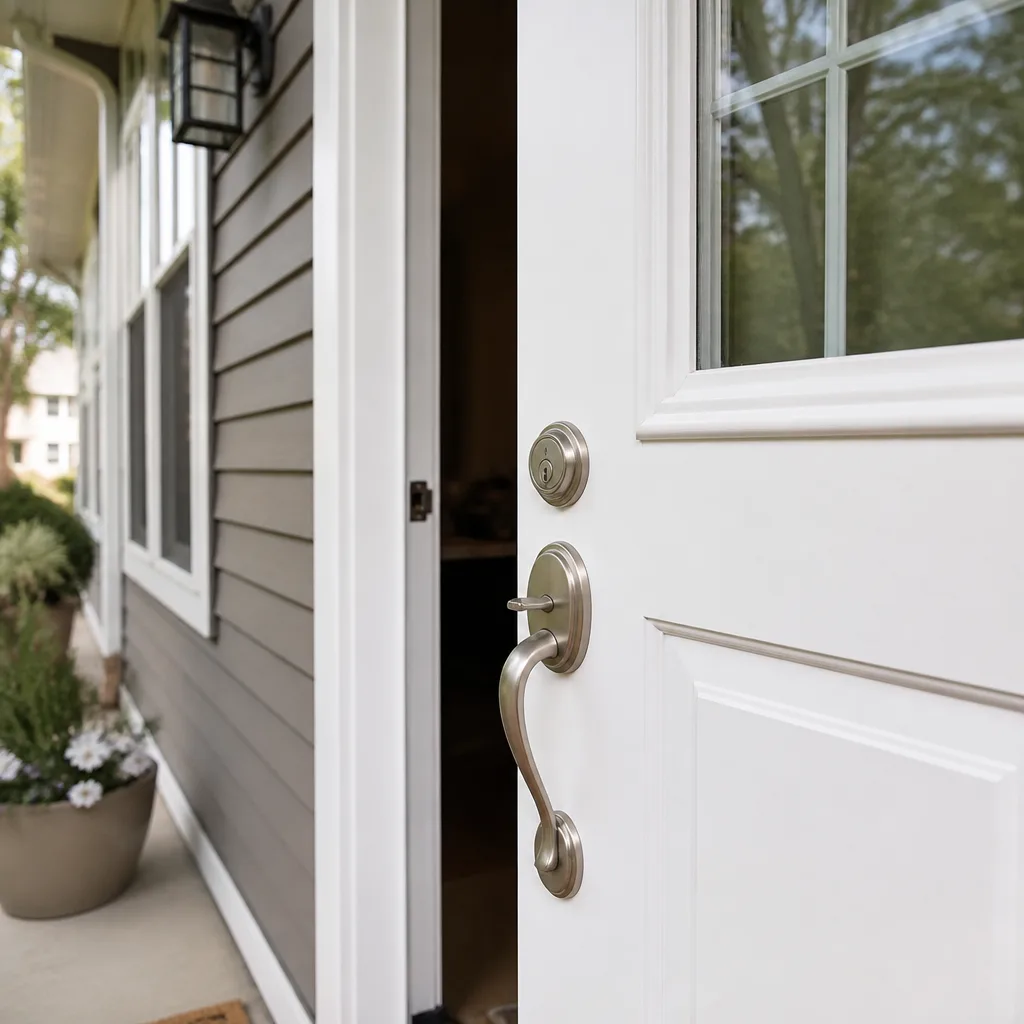
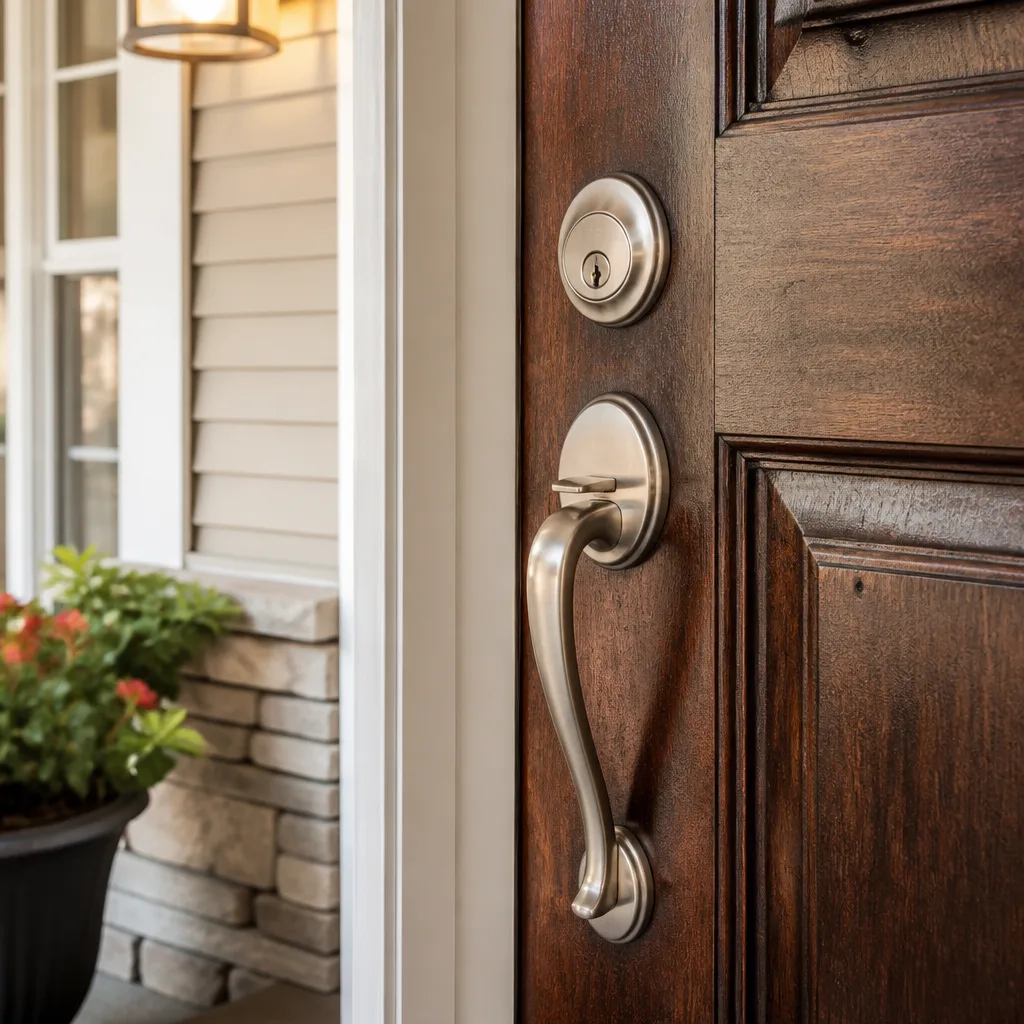
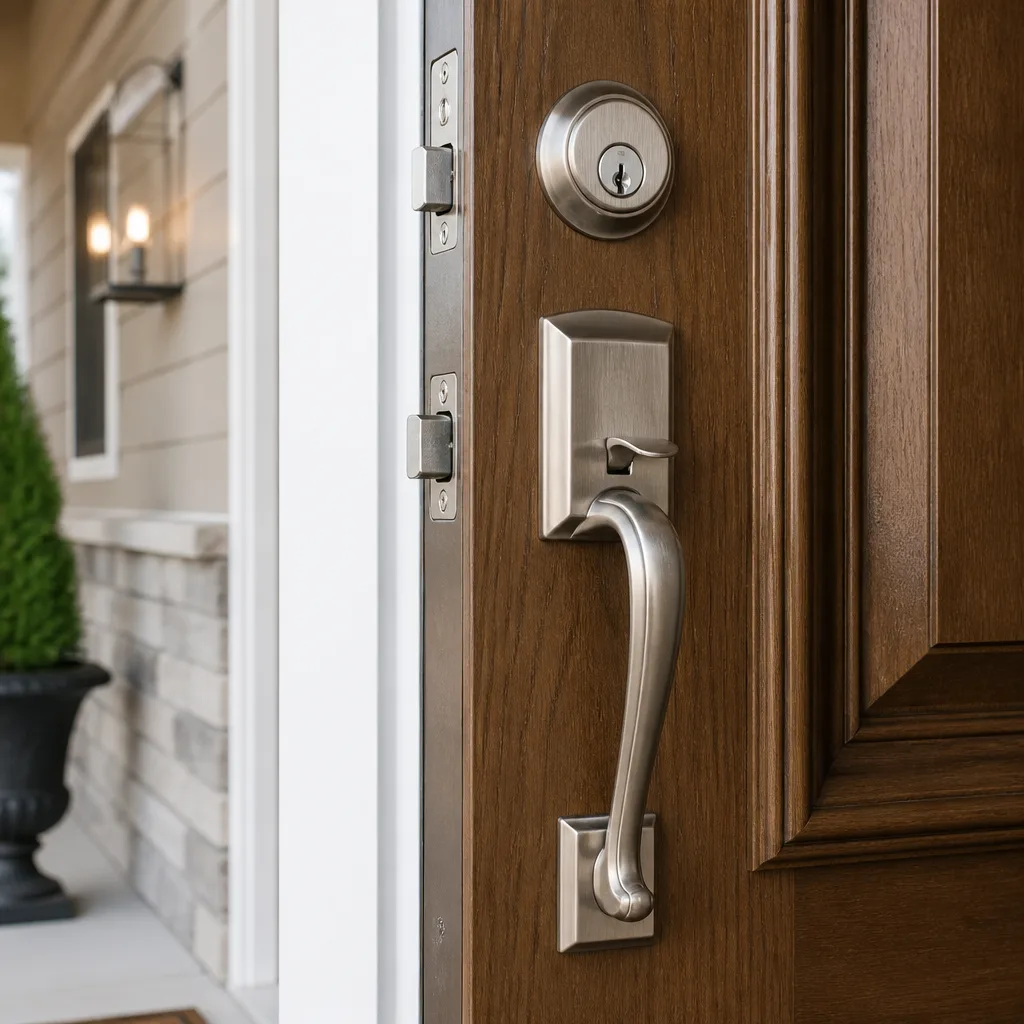
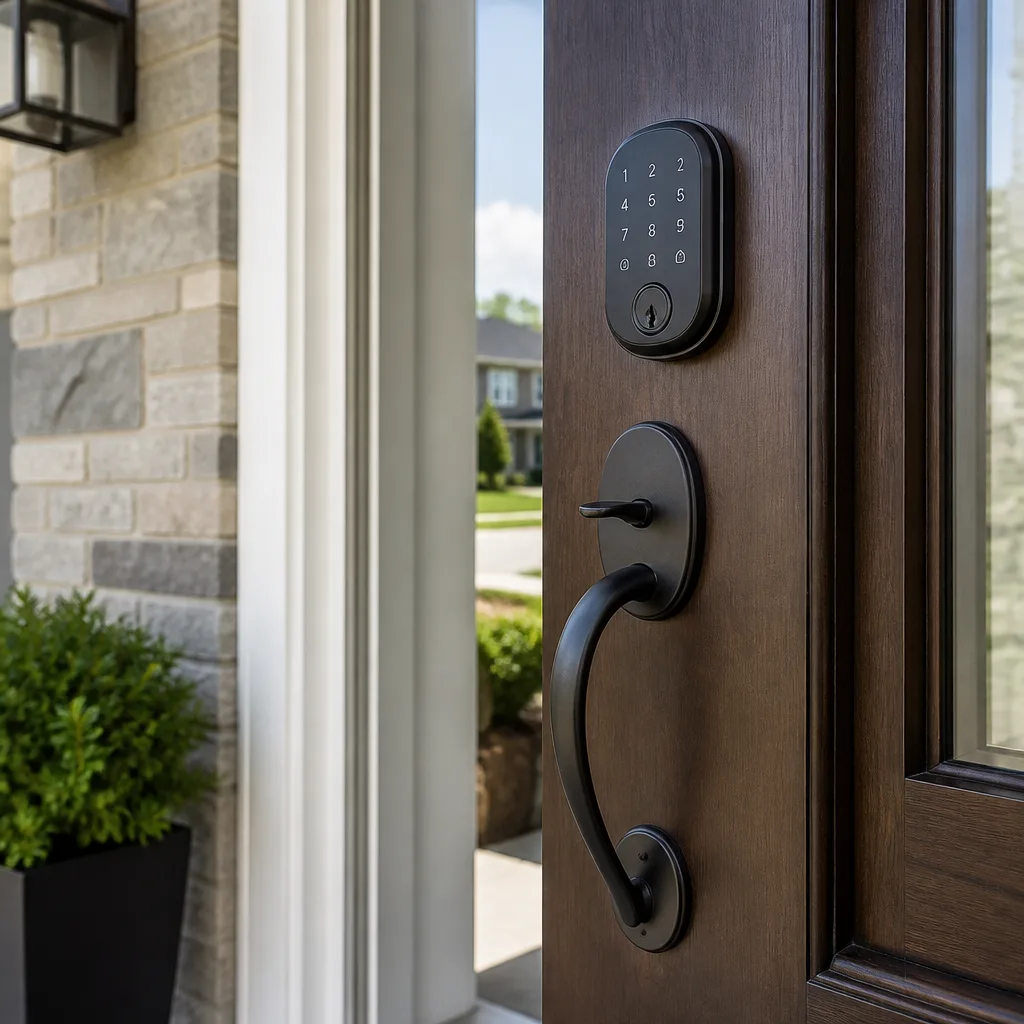
Commercial Locksmith Maintenance Checklist for Los Angeles Homeowners
Here’s a fact most Los Angeles business owners learn the hard way: if an employee is injured because a faulty panic bar or door closer delayed an evacuation, your general liability insurer will ask for maintenance records before they write a check. No documented hardware inspection, no coverage. A commercial lease in Los Angeles doesn’t shield you from this either. Most leases make door hardware, locks, and panic bars the tenant’s responsibility, not the landlord’s. This guide walks through a Commercial Locksmith Maintenance Schedule: What to Do and When, what Los Angeles fire code and ADA rules actually require, and how to document everything so you’re protected when it matters.
Quick Answer
Commercial Locksmith maintenance in Los Angeles should happen at least twice a year for most businesses, with high-traffic retail and restaurant spaces needing quarterly checks. The core checklist covers panic bars, door closers, hinges, locking hardware, weatherstripping, and key control. Document every inspection and repair in writing because that record is what protects you at insurance claim time and during fire marshal visits.
Table of Contents
- Why Commercial Lock Maintenance Is a Liability Issue, Not Just a Hardware Issue
- What Los Angeles Fire Code and ADA Rules Actually Require
- The Room-by-Room Inspection Checklist for Business Owners
- How Often Los Angeles Businesses Should Schedule Professional Hardware Audits
- What to Put in Writing Before Any Commercial Maintenance Visit
- Master Key System Drift: The Security Gap Nobody Tracks
- Common Mistakes to Avoid
- When to Call a Professional
- Frequently Asked Questions
Why Commercial Lock Maintenance Is a Liability Issue, Not Just a Hardware Issue
Here’s how it plays out in Los Angeles. A restaurant on Vermont Avenue has a rear exit door with a panic bar that’s been sticky for months. Staff prop the door open during prep shifts because the bar takes two hands to retract. One night, a small fire starts near the fryer. An employee reaches the back door, pushes the panic bar, and nothing moves. The delay costs seconds. The injury claim follows. The insurer denies coverage because the owner can’t produce a single maintenance record showing the panic bar was ever inspected. That’s the realistic sequence, and it happens more often than any business owner wants to believe.
Commercial locks and door hardware are safety equipment. They matter under fire conditions, during medical emergencies, and when someone needs to secure a space quickly. If a lock cylinder wears out and a door won’t open from the inside, that’s not a Tuesday inconvenience. It’s an egress failure. And egress failures in commercial spaces are precisely what city inspectors and insurance adjusters look for. Los Angeles landlords may own the building, but the tenant operating the business usually owns the liability for what happens inside. This is why we frame maintenance as a documentation exercise, not just a repair task. Every service call should produce a record: what was inspected, what was adjusted, what was replaced, and the date. That record is your defense.
In our experience at Commercial Locksmith in Los Angeles jobs, about a third of the hardware problems we find during routine maintenance were not reported by anyone in the business. Doors get used hundreds of times a day. People compensate for small problems automatically: they lift the door slightly when turning the key, they pull harder on a failing closer, they ignore a latch that doesn’t fully throw. None of that shows up on an incident report. It only shows up when a trained technician walks the property and checks each door with fresh hands.
What Los Angeles Fire Code and ADA Rules Actually Require
Los Angeles enforces the California Fire Code with local amendments, and commercial door hardware sits squarely inside that code. The headline requirements start with egress. Any door on an exit path must open from the inside with a single motion, no key, no special knowledge, no two-hand operation. That means panic hardware or simple thumb-turn deadbolts on exit doors, never a keyed cylinder on both sides. A failed panic bar or a closer adjusted so tight the door won’t open becomes a citation during a fire marshal inspection, not a repair conversation.
ADA requirements layer on top. The Americans with Disabilities Act sets maximum opening force for interior doors at five pounds of pressure. Exterior doors can require more, but interior doors that take a shoulder to open are non-compliant. Door closers must close slowly enough to avoid slamming and fast enough to latch. If a closer is misadjusted so the door drifts closed slowly and never fully latches, you have both a security gap and a code violation. In Los Angeles, ADA compliance is not optional, and enforcement has increased in commercial districts like Downtown LA, Koreatown, and the Valley.
The piece most business owners miss is documentation. The fire marshal does not ask whether you think your doors work. They ask for records showing a qualified person inspected and maintained the hardware. A binder with laminated inspection sheets from a professional locksmith carries meaningful weight. A shrug does not. We’ve seen businesses in Culver City and North Hollywood pass fire inspections with no corrections specifically because they had a year of documented hardware maintenance on file. The checklist a professional uses aligns with these code expectations: panic bar pressure and engagement, closer sweep and latch speed, hinge wear and alignment, fire door conditions around the hardware, and strike plate security.
One more Los Angeles-specific note: the city’s older commercial stock, buildings in the Arts District, Boyle Heights, and along Figueroa, often has doors that were installed before current code took effect. A door that met code in 1987 may not meet it now. Routine maintenance is the moment to catch that gap before an inspector does.
The Room-by-Room Inspection Checklist for Business Owners
You don’t need to be a locksmith to spot problems early-our more guides & resources cover what to look for. Here’s a plain-language checklist you can walk with, room by room, before calling a professional for a full audit. Each item describes what worn, loose, or misaligned looks like in the real world.
Entry Doors and Lobby
- Deadbolt throw: Does the bolt fully extend into the strike plate, or does it stop halfway? A bolt that doesn’t fully throw can be shimmed or forced with a credit card or pry tool.
- Key feel: Is the key hard to insert, hard to turn, or does it feel gritty? That’s cylinder wear or dirt. In Los Angeles, coastal moisture in areas like Santa Monica and Venice accelerates cylinder corrosion.
- Door closer: Does the door slam, drift, or stand open instead of closing smoothly? Each is a separate problem: incorrect adjustment, low hydraulic fluid, or a broken spring.
- Strike plate: Are the screws tight? Is the plate bent or worn where the latch hits? Loose strike plates are a forced-entry risk.
Restrooms and Interior Doors
- Privacy function: Do the privacy thumb-turns on restroom locks still move freely? A seized privacy lock is an ADA issue and a customer complaint generator.
- Hinge sag: Does the door scrape the floor or the frame? Sagging hinges misalign the latch and shorten the life of the lock.
- Latch alignment: When you close the door slowly, does the latch click into the strike plate, or does it hit the edge first? Misalignment usually means worn hinges or a loose frame.
Stockrooms, Server Rooms, and Office Doors
- Cylinder wear: On any door that gets keyed access fifty times a day, check whether the key wiggles in the cylinder. Wiggle means worn pins inside the lock, which eventually leads to key breakage.
- Keyed exit doors: If any door on an exit path requires a key to open from the inside, that’s a code violation now, not a future repair.
- Door stops and silencers: Missing or broken door stops let handles punch holes in drywall. That’s a wall repair and a signal the door is closing too hard.
Storage Areas and Back Exits
- Panic bar condition: Press the panic bar with one hand. Does it retract the latch immediately and fully? Any binding, sticking, or partial retraction is a failure in waiting.
- Weatherstripping: Check around the door perimeter. Damaged or missing weatherstripping lets in dirt, water, and in Los Angeles’s dry, dusty months, an impressive amount of fine particulate that grinds away at hinges and cylinders.
- Padlocks and hasps: For outbuildings and gates, check that hasps are bolted, not screwed, and that padlocks are keyed to your system, not some random key you found in a drawer.
How Often Los Angeles Businesses Should Schedule Professional Hardware Audits
There’s no single answer, but there is a reliable formula based on foot traffic. Here’s what we recommend in Los Angeles, where a restaurant on Melrose may see 300 people on a Friday night while an office suite in Glendale sees 40 employees over a week.
- Retail storefronts and restaurants: Quarterly professional inspections. High door cycles, the public using the hardware, and delivery traffic all accelerate wear. Panic bars, closers, and entry locks should be adjusted and documented every three months.
- Office suites and professional services: Twice a year. The hardware gets predictable use and the main risks are cylinder wear, striker plate loosening, and gradual closer misadjustment.
- Warehouses and industrial spaces: Twice a year minimum, plus immediate repair on any loading dock or roll-up door hardware problem. These doors are heavy, and the hardware takes a beating.
- Medical and dental offices: Twice a year at minimum, because patient privacy obligations add a key-control layer. Locks that don’t latch or closers that leave exam room doors ajar create HIPAA exposure, and that’s a different kind of liability.
Seasonal realities in Los Angeles matter too. The Santa Ana winds in fall dump fine dust into every exterior lock impression. Coastal humidity from Palos Verdes to Long Beach corrodes cylinders faster than the dry Inland side. And the summer heat can cause door frames in full sun exposure to expand enough to change latch alignment. A professional audit catches these shifts before they become lockouts or egress failures.
Whatever your traffic tier, the principle is simple: schedule maintenance on a calendar, not when something breaks. The businesses that treat this like a fire extinguisher tag, done on schedule and documented, are the ones whose insurance claims and fire inspections go smoothly.
What to Put in Writing Before Any Commercial Maintenance Visit
This is where Los Angeles business owners get real protection. The contract, or even a simple written work order, is what turns a service call into a liability shield. Before any maintenance visit, put these items in writing with the locksmith.
- Scope of work: List exactly what will be inspected: entry doors, exit doors, panic hardware, closers, key systems, padlocks, and any access control components. A vague “check the locks” leaves room for missed doors.
- Finding notification: State that the locksmith must report any hardware found worn, misaligned, or non-compliant, in writing, before leaving the property. You want the findings documented whether you choose to repair immediately or not.
- Parts warranty: Put a number on it. At Loxley Locksmith & Security home, every repair we make carries a written 365-day guarantee on parts and labor. If it fails inside a year, we return at no charge. That’s the standard to ask for, and it should be in writing, not a verbal promise.
- Damage liability: Agree in advance who is responsible if repair work damages the door, the frame, or surrounding finish. A professional shop will carry insurance and state plainly that they’re responsible for damage caused during the visit.
- Key inventory: If the work involves rekeying, the written scope should specify how many keys will be provided, who receives them, and how the key matrix is documented. This prevents the drift problem we cover below.
At Loxley Locksmith & Security, this is just how we operate. Every job gets a written price before any work starts. The price doesn’t change at the door. No dispatch fee added on arrival. The guarantee is in writing on the invoice, for a full 365 days. If you’ve had a locksmith quote one number and charge another, that’s the exact pattern this process is designed to prevent. Ask any contractor you’re considering to put the same terms in writing. A refusal tells you what you need to know.
Master Key System Drift: The Security Gap Nobody Tracks
Every business with more than a couple of doors has some version of a key system, and every key system drifts. Here’s how. You hire an employee. You cut them a key. They leave. You get the key back, or maybe you don’t. Either way, you don’t know how many copies were made. A year later, someone’s car is broken into and a building key was on the ring. Now every door that key touched is compromised. That’s drift, and it’s cumulative.
Without routine maintenance and key audits, drift compounds. An employee terminated in 2021 had a key to the back door. A manager who left in 2023 had a master that opened everything. A contractor from 2022 still has a sub-master in a truck somewhere. Most Los Angeles businesses cannot answer the simple question: how many keys exist for this building, and who holds them. That’s a security gap, and it grows quietly.
Routine maintenance is the moment to address it. During a professional hardware audit, the locksmith should:
- Take an inventory of every keyed cylinder and which keys operate it.
- Identify any cylinders that have drifted outside the intended key matrix.
- Recommend rekeying any door group where former employees or contractors held keys.
- Document the current key hierarchy so there is a baseline going forward.
Rekeying a standard commercial cylinder from Schlage or Kwikset in Los Angeles typically runs $25 to $40 per cylinder, with labor. Medeco and other high-security cylinders run more, often $50 to $75 per cylinder for rekeying because the keys are restricted and the pins are specialized. A full audit with rekeying on a ten-door office might run $400 to $700 all in. Compare that to the cost of a former employee using an old key to remove inventory, access customer data, or enter an unoccupied building at night. The math is not close.
For higher security, we stock and service hardware from Medeco, Yale, Baldwin, and Kwikset. Medeco’s restricted keyways mean keys can’t be duplicated at a hardware store; you control duplication through an authorized dealer. That alone stops a large percentage of drift. But no key system maintains itself. Someone has to check it. That’s what maintenance is for.
Common Mistakes to Avoid
- Waiting for a failure: The single most common mistake in Los Angeles commercial spaces is reactive maintenance. If your only hardware service happens after a lockout or a broken panic bar, you’re already behind on code compliance and insurance documentation.
- Paying twice: Some operators accept a low quote, then pay a surprise fee on arrival. Set the rule in writing: the price quoted is the price on the invoice. If a contractor won’t agree to that, walk away.
- Skipping the documentation: A repair without a written record is almost useless for insurance and fire marshal purposes. Always get the inspection sheet, the work order, and the guarantee in writing.
- Leaving key control to memory: Trying to remember who has keys is not a system. A written key log, updated during every maintenance visit and every employee departure, is a system. Los Angeles restaurants with high staff turnover especially need this.
- Ignoring small resistance: A key that sticks, a latch that doesn’t throw, a closer that slams. Small mechanical complaints are the early warning system for bigger failures. Each one is a cheap fix now and an expensive repair or liability event later.
- Not checking code on older buildings: If your building was last updated before the current fire code or ADA standards took effect, assume some hardware is non-compliant until checked. Los Angeles inspectors do not grandfather endless deferred maintenance.
When to Call a Professional
Call before the door fails. If you can’t remember the last professional hardware inspection, schedule one now. If a panic bar sticks, a closer won’t hold, a key breaks in a cylinder, or a door won’t latch, call on the same business day. If an employee leaves under difficult circumstances and had keys, call to have those cylinders rekeyed before the next shift. If the fire marshal has sent a correction notice, call immediately and mention the notice when you book. Loxley Locksmith & Security offers free estimates in Los Angeles. Call (682) 281-8985 to schedule a commercial maintenance visit or a full hardware audit.
Frequently Asked Questions
A standard commercial maintenance visit for a small to mid-size space typically runs $150 to $350, depending on how many doors and cylinders are inspected. Rekeying individual cylinders adds $25 to $40 per cylinder for standard Schlage or Kwikset hardware, and high-security Medeco rekeying runs $50 to $75 per cylinder. Loxley Locksmith & Security provides a written price before any work starts, so the figure on the phone is the figure on the invoice. Call (682) 281-8985 for an exact quote on your specific doors.
With us, yes. Every Loxley Locksmith & Security job gets a written price before work begins, and there’s no surcharge added when the technician arrives. If the technician finds damage that requires additional work beyond the original scope, you get a new written price and your approval before that extra work proceeds. You’ll never see an unapproved charge on the invoice.
We answer calls with a live person 24/7, and for emergency hardware failures like broken panic bars or keyed doors that won’t open, we dispatch same day in Los Angeles. Routine maintenance visits and full audits are scheduled at a time that works for your business hours, usually within a few days. Call (682) 281-8985 and tell us what’s failing.
Yes. If a commercial claim involves an injury, a break-in, or an evacuation, your insurer will ask for maintenance records. A written work order showing regular hardware inspections strengthens your position, and the absence of records can be used to deny or reduce a claim. A documented annual or semi-annual audit is the baseline most commercial insurers expect.
The California Fire Code requires periodic inspection of fire doors, and Los Angeles amends and enforces that requirement. Depending on the building occupancy, fire doors may need annual inspection by a qualified person, with a written record kept for the fire marshal’s review. If your property has fire doors, confirm the inspection schedule with your building manager and include door hardware checks in your locksmith maintenance scope.
Yes. Many commercial maintenance programs include access control components like keypads, card readers, electric strikes, and mag locks. Loxley Locksmith & Security works on Access Control Systems in Los Angeles and can integrate a hardware audit with your access control system so mechanical locks and electronic access are documented together. Sam Rourke, who runs our Los Angeles commercial work, handles the full range from standalone keypads to integrated card systems.
The Bottom Line
Commercial locksmith maintenance in Los Angeles is a liability-management practice, not a hardware chore. Documented inspections of panic bars, door closers, hinges, and key systems protect your business at insurance claim time, keep you clear of fire marshal citations, and close the security gaps that key drift creates. Schedule twice a year for most operations, quarterly for high-traffic retail and restaurants. Get every inspection and repair in writing, with a clear guarantee on parts and labor. If you’ve been burned by a locksmith who changed the price at the door, the fix is a written quote before work starts. Loxley Locksmith & Security has operated that way since 2007, as part of the Kingswell family of locksmith companies, and the offer stands: free estimates in Los Angeles, a live person on the phone 24/7, and the price you’re quoted is the price you pay. Call (682) 281-8985 to schedule a maintenance visit or ask a question about your hardware.
Written by Sam Rourke, Owner at Loxley Locksmith & Security, serving Los Angeles since 2007.