
Last updated October 8, 2026
Non-destructive entry first, always - and we re-key Schlage, Kwikset, and Baldwin locks on the spot while you watch
You get a price before we start. It does not change when we arrive. No surprises.
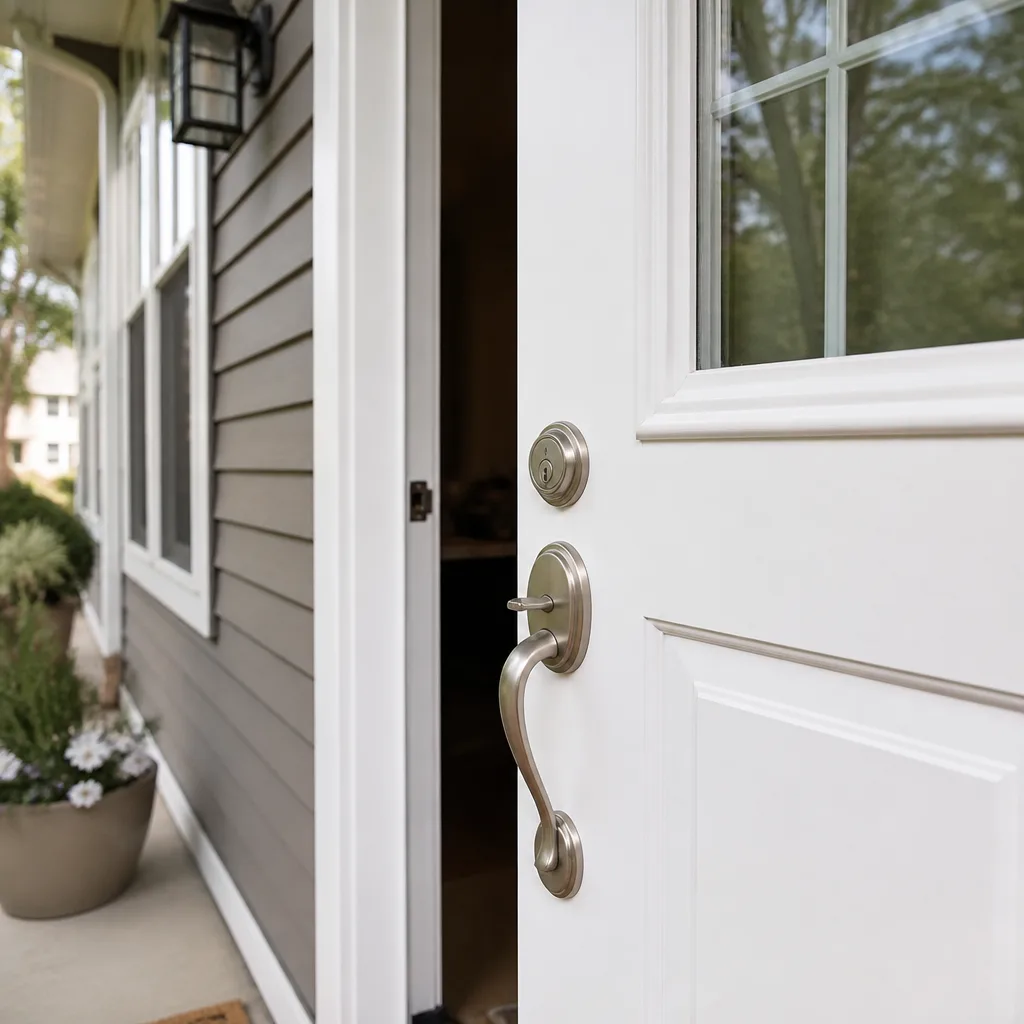
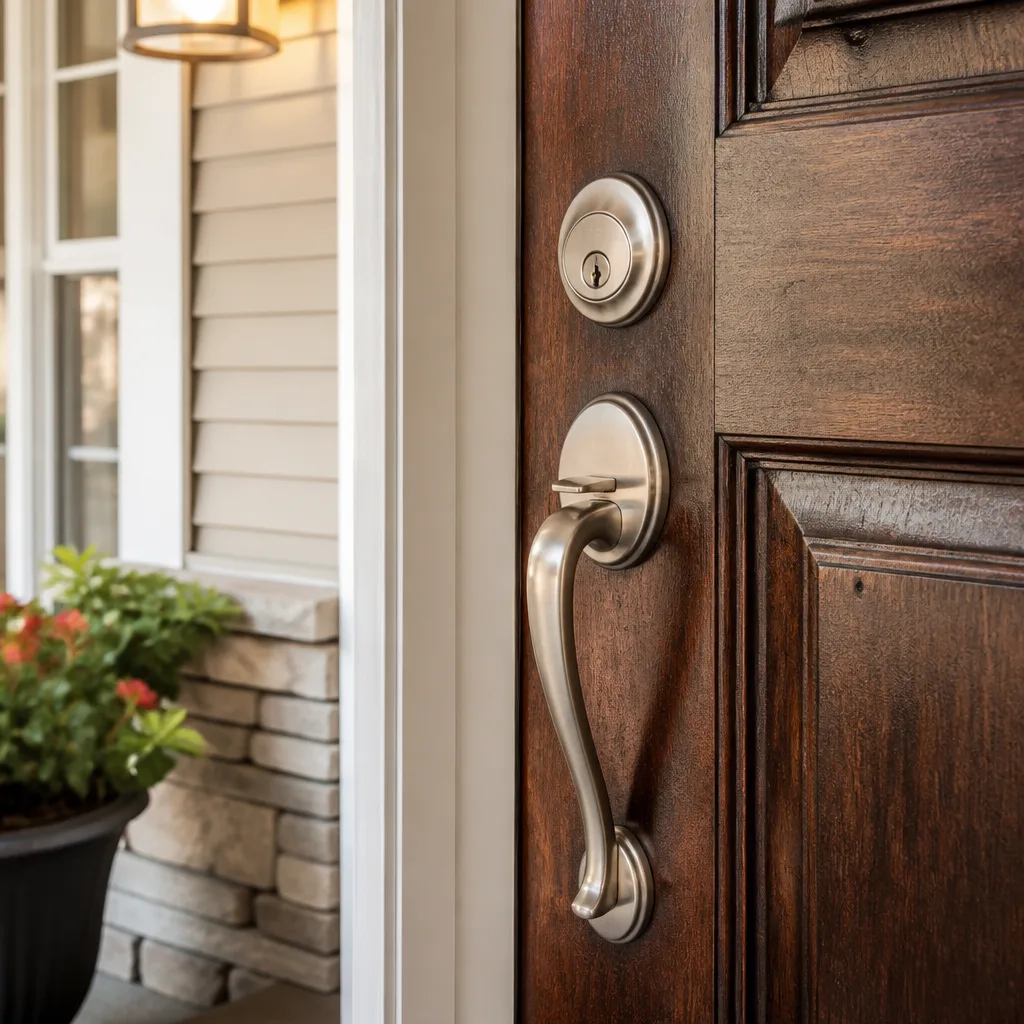
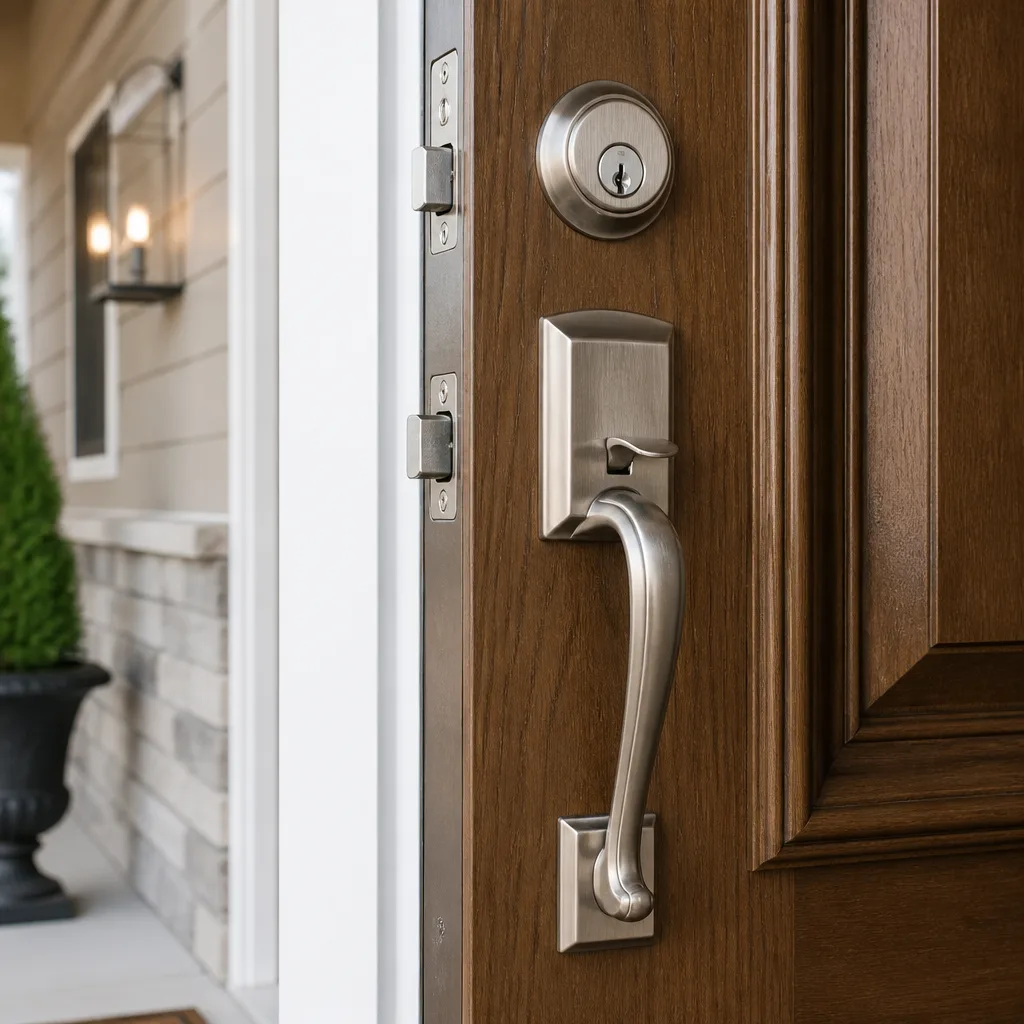
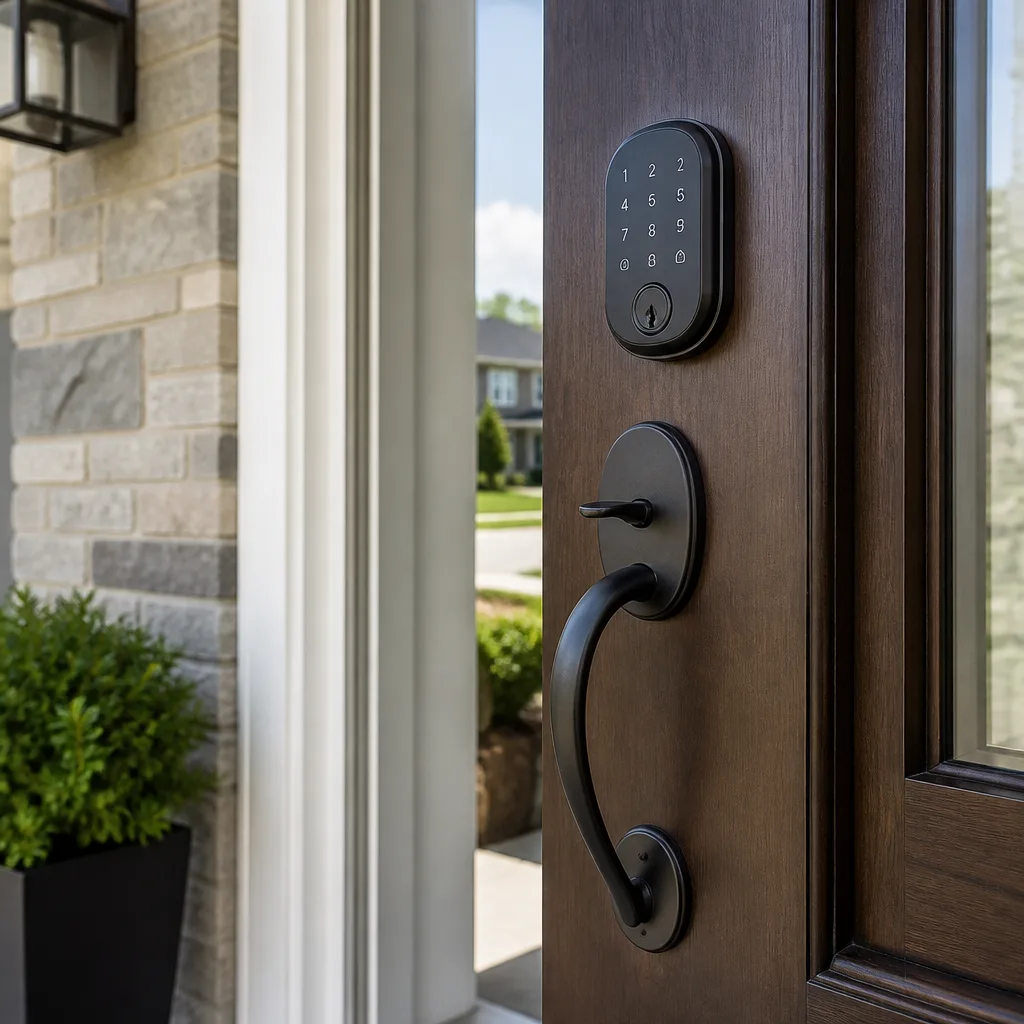
Locksmith Emergency Preparedness Guide for Los Angeles Homes
Most Los Angeles homeowners who get gouged during an after-hours lockout weren’t victimized by bad luck. They were caught in a zero-leverage position: no spare key, no locksmith’s name on file, no written price, and no option but to say yes to whoever showed up first. This guide is about building leverage before you need it. In the next few minutes, you’ll learn how to set up a spare key infrastructure that actually works, how to vet a locksmith before an emergency puts you under pressure, which hardware choices prevent entire categories of lockouts, and what to do in the first five minutes of a lockout in Los Angeles to keep an $85 problem from becoming a $400 one.
Quick Answer
A truly prepared Los Angeles home has three things in place before any lockout happens: a documented spare key system (not a magnetic hide-a-key), a pre-vetted locksmith’s number saved with a written price understanding, and at least one deadbolt with an interior thumb-turn so certain lockouts can’t happen at all. (See our Residential Locksmith Maintenance Schedule: What to Do and When for a full yearly checklist.) The goal is to never be in a position where you’re calling a stranger at 2 AM with no alternative and no way to verify the price you’ll be charged.
Table of Contents
- The Spare Key Infrastructure Every Los Angeles Home Needs
- How to Vet and Save a Locksmith’s Contact Before You Need One
- Lock Hardware Choices That Reduce Emergency Vulnerability
- The Written Home Security Card
- What to Do in the First Five Minutes of a Los Angeles Lockout
- What Lockouts and Repairs Actually Cost in Los Angeles
- Preparing for a Trip Away From Your Los Angeles Home
- Common Mistakes to Avoid
The Spare Key Infrastructure Every Los Angeles Home Needs
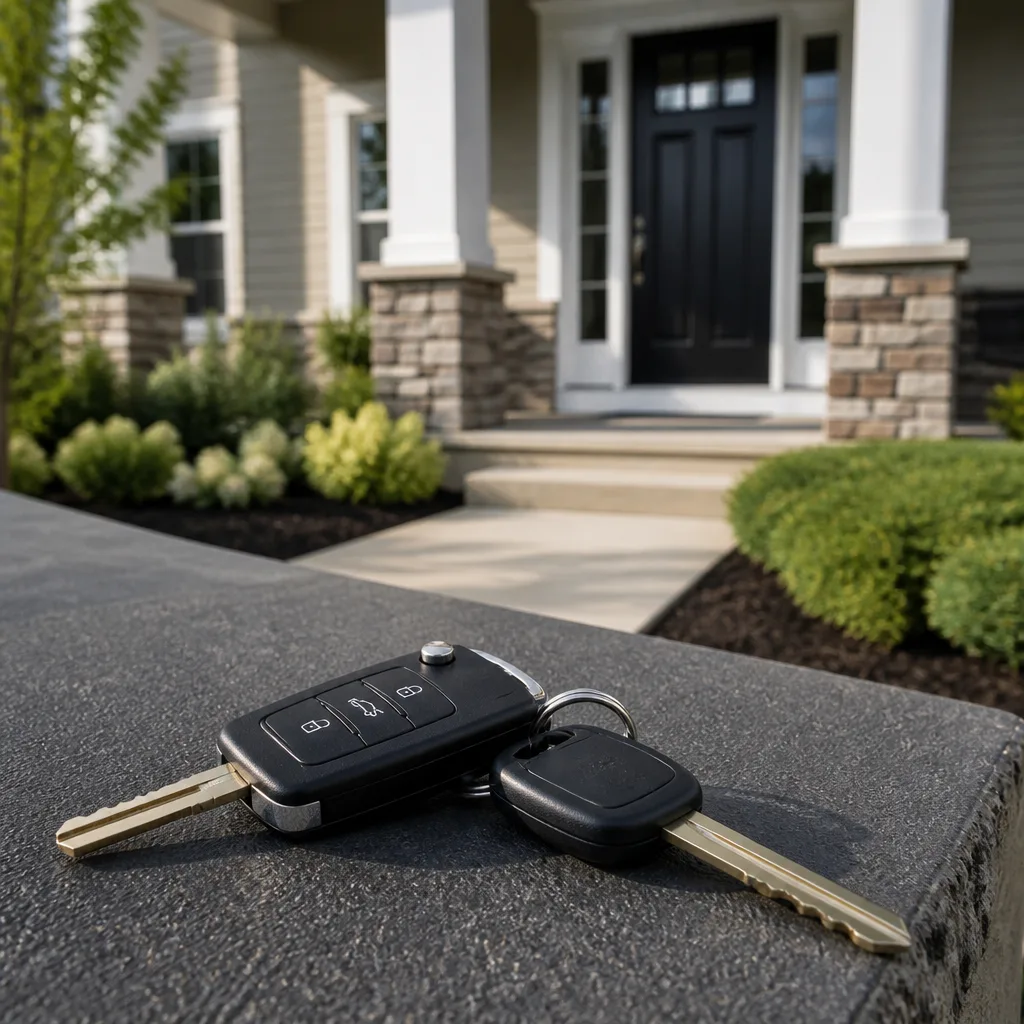
Here’s the uncomfortable truth: the magnetic hide-a-key under the rock by the front planter is the first place a burglar looks, and the second place they look is the one under the doormat. Los Angeles is a city of renters, roommates, and multigenerational households, which means keys move through more hands than most people realize. A spare key strategy that isn’t documented is a strategy that quietly fails.
What a working spare key system actually looks like:
- Two spare copies per exterior door lock. Not one. Two. If you hand one to a neighbor and keep one in a lockbox, you’ll still have access if either fails. Most hardware stores in Los Angeles will cut a standard Kwikset or Schlage key for under $5. If you have a Medeco or Mul-T-Lock high-security key, copies must come through the locksmith who controls your keyway, which is a good reason to know who that is before an emergency.
- A key lockbox, not a hide-a-key. A wall-mounted or shackle-style lockbox with a 4-digit combination costs between $25 and $60 and gives you a retrieval path that doesn’t involve loose keys in the garden. Shacks in the Hollywood Hills and condos in Koreatown both benefit from this, because the lockbox itself is weatherproof and doesn’t care how dense your neighborhood is.
- A neighbor protocol. Choose one neighbor, ideally someone who is home at different hours than you are. Give them one copy in a sealed envelope with your name on it. Agree on how they’ll verify it’s really you before handing it over. The protocol is the point. Without it, you’re just giving a key to someone and hoping they remember they have it.
- A key register. A simple written list: how many copies of each key exist, who holds each one, and the date you last confirmed they still have it. Update it once a year. Most Los Angeles households cannot answer the question “how many people have a key to your front door right now?” If you can’t answer that, you can’t make an informed decision about rekeying.
One more thing worth doing annually: walk your own neighborhood in Los Angeles and notice who has a Ring camera or similar. Knowing which neighbors have footage of your front door costs you nothing and can resolve a dispute about who came and went.
How to Vet and Save a Locksmith’s Contact Before You Need One
Here’s how the bad actors operate in Los Angeles: they run ads promising $15 service calls, dispatch someone unlicensed in an unmarked car, and quote a locked-out homeowner $400 once the door is half-disassembled. (For how to spot these scams ahead of time, read our Locksmith Warning Signs: A Los Angeles Homeowner’s Reference Guide.) By the time you realize what’s happening, you’re tired, it’s late, and the guy has your doorknob in his hand. The fix isn’t to get better at negotiating at 2 AM. The fix is to never be in a negotiation at 2 AM in the first place.
Pick a calm Saturday afternoon, spend 20 minutes, and confirm these three things about any locksmith you’re considering:
- Do they give a written price before work starts? This is non-negotiable. A legitimate Los Angeles locksmith will tell you the service call fee, the labor estimate, and the parts cost before they touch your door. If the answer to “will you send me that in writing?” is anything other than yes, hang up. At Loxley Locksmith & Security, that’s the standard, not an upgrade: a written price is delivered before any work begins, and the number on that paper is the number on the invoice.
- Who is actually showing up? Ask if the technician is background-checked and arrives in a company uniform and marked vehicle. An unmarked car and a guy in street clothes is the profile of a bait-price operation. Our technicians are background-checked, uniformed, and they arrive in a vehicle that says who we are.
- What does the guarantee cover, and for how long? A repair that fails six weeks later isn’t a repair, it’s a temporary patch you paid full price for. Ask what the warranty period is, whether it covers parts and labor, and what happens if it fails. The 365-Day Done Right Promise at Loxley covers parts and labor for a full year, and if the repair fails inside that window, we come back and fix it at no charge.
Once you’ve confirmed those three things, save the number in your phone under something you’ll actually remember, like “Locksmith – Sam at Loxley.” Add a note in the contact field: “written price before work, 365-day guarantee, 24/7 live person.” Now when the emergency happens, you’re calling a known quantity.
Lock Hardware Choices That Reduce Emergency Vulnerability
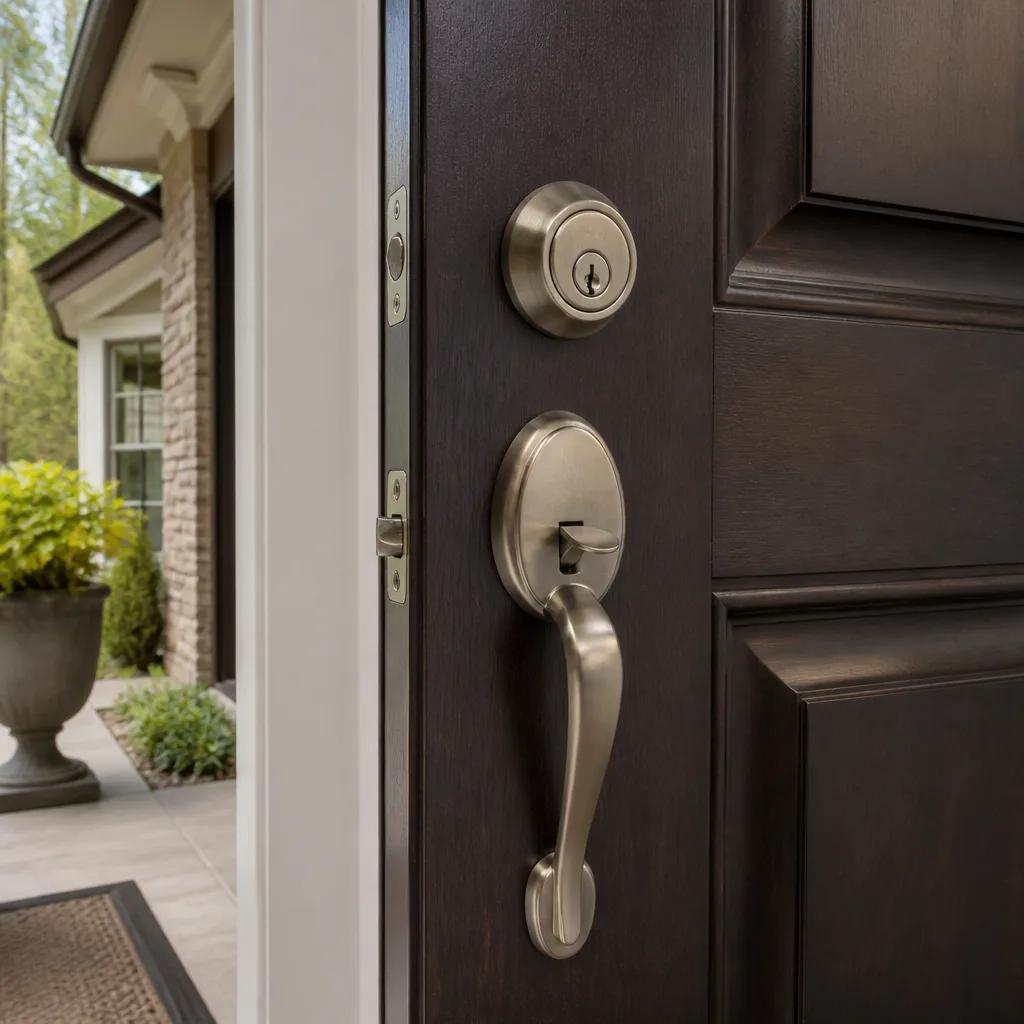
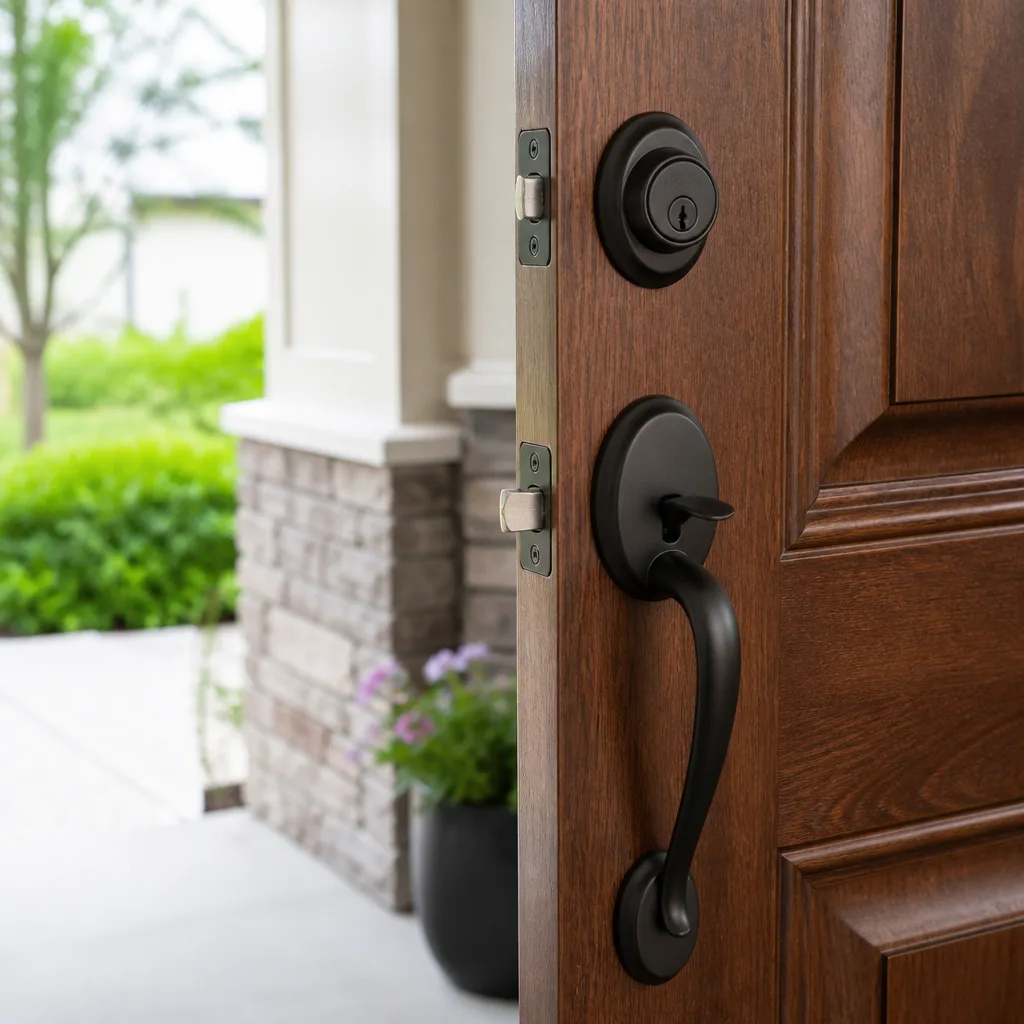
Some of the most common emergency locksmith calls in Los Angeles are for situations that a $20 hardware upgrade would have prevented entirely. The deadbolt with a thumb-turn interior is the classic example. A deadbolt that requires a key from both sides is a fire hazard and a lockout machine: you leave the key in the inside lock, you go out through the garage, and now you’re on the sidewalk watching your front door locked from the inside with no way back in. A thumb-turn deadbolt from Kwikset or Baldwin lets you lock and unlock from the interior without a key, and it doesn’t change the exterior security at all. If your house has a double-cylinder deadbolt because a window is within arm’s reach of the door, the fix is a thumb-turn deadbolt plus window pins or laminated glass, not a key-operated interior.
Other hardware decisions that quietly prevent emergencies:
- Grade 2 or Grade 1 deadbolts, not builder-grade. In Los Angeles, the difference between a Grade 3 lock and a Grade 2 lock from Kwikset or Yale is often $15 to $30 per lock. The higher grade means a steel core and a throw bolt that resists kicking. It also means fewer failures inside the lock body, which means fewer times you’re standing outside a door that simply won’t open.
- Smart locks with keypad backup. A lock like the Kwikset Halo or certain Yale smart locks gives you a code-based entry path that doesn’t depend on a physical key. For Los Angeles households with kids, dog walkers, or house cleaners, a keypad is an emergency preventer: you can create and delete codes without ever handing out a key that can be copied.
- Restricted keyways on high-security locks. If you’re in a neighborhood in Los Angeles where package theft and home break-ins are a real concern, hardware from Medeco or Baldwin with a restricted keyway means key copies can only be made by the locksmith who controls your keyway. That’s a security feature, and it also means you always know who to call when you need a copy.
The point is this: emergency locksmith preparedness isn’t only about what you do when you’re locked out. It’s about the thirty-second hardware decisions you make when everything is fine and you’re not under any pressure at all.
The Written Home Security Card
Most homeowners have never heard of a home security card, and it’s probably the single highest-leverage document you can create for emergency preparedness. The idea is simple: a single sheet of paper that answers every question a housesitter, a family member, or a panicked version of you needs answered in a lockout or security situation.
What goes on it:
- Your pre-vetted locksmith’s name and phone number. Not “a locksmith.” The specific one you already confirmed gives written prices and has a guarantee. If that’s Loxley Locksmith & Security, the number is (682) 281-8985, and a live person answers it 24/7.
- Your key register. How many copies of each key exist and who holds them. If you’re locked out and you can’t remember whether the neighbor still has a copy, you’ll pay for a lockout service that you could have solved with a five-minute walk.
- The location of any lockbox, and its combination. Do not put this on a sticky note on the fridge. Do put it on the security card, and keep the card where you keep other important documents, like a fire safe or a locked drawer.
- Your lock hardware details. Brand, model, and whether it’s a standard or restricted keyway. When you call your locksmith, knowing you have a Medeco deadbolt with a restricted keyway means they can tell you on the phone whether they can cut a key or whether you need a different approach.
- A brief inventory of who has had keys and when. If a roommate moved out six months ago and you never rekeyed, the card tells you that at a glance. Los Angeles has a large student and renter population, and turnover means keys drift.
The card doesn’t need to be complicated. A single page, updated once a year, kept in a place where at least one other person besides you knows where to find it. That’s the whole system. And it’s the difference between making a calm phone call and making a desperate one.
What to Do in the First Five Minutes of a Los Angeles Lockout
When you’re standing outside your own door and the key isn’t in your pocket, the first five minutes determine whether this is annoying or expensive. Here’s the sequence that preserves your options, in order:
- Stop and verify. Check every pocket, the bottom of your bag, the car, and the spot by the front door where you sometimes set things down. This sounds obvious, but in Los Angeles, where people move between car, home, and office constantly, the key is often in a jacket pocket you forgot you owned.
- Check every entry point. Walk the perimeter of the house or apartment. In Los Angeles, a surprising number of successful self-rescues happen through an unlocked back door, a window you left cracked, or a side gate that was never latched. Don’t break anything, just check.
- Identify your spare key path. Do you have a lockbox? A neighbor with a copy? A family member nearby who has one? This is where the infrastructure from earlier in this guide pays off. If you built it, you’re about to spend zero dollars.
- If no spare key path exists, make the call before you’re exhausted. The longer you wait, the more likely you are to accept the first number a stranger quotes you. Call the number you pre-vetted. Ask for the written price before they dispatch. If you haven’t pre-vetted anyone, tell the dispatcher you want to confirm the price before the technician leaves, and write down whatever number they give you.
- Stay near your front door and wait. A legitimate Los Angeles locksmith will give you an arrival window and meet it. If someone shows up in an unmarked car and starts quoting a different number than what you were told on the phone, that’s your cue to decline.
The pattern here is the same as everywhere else in this guide: the decisions you make when you’re calm are better than the decisions you make when you’re not.
What Lockouts and Repairs Actually Cost in Los Angeles
Let’s talk about the numbers, because the Los Angeles locksmith market has a wide spread between honest pricing and bait pricing, and you should know which side of that spread you’re on before you ever need the number.
- Standard residential lockout, business hours: $65 to $120, depending on distance and the type of lock. Most legitimate Los Angeles locksmiths stay in this range for a straightforward deadbolt or doorknob lockout where no drilling is required.
- After-hours lockout (nights, weekends, holidays): $120 to $200. This is the range where honest operators land. Anyone quoting $19 and then arriving with a story about why it’s actually going to be $400 is running the classic Los Angeles bait-and-switch.
- Rekeying a standard Schlage or Kwikset deadbolt: $85 to $150 per lock, including labor. Rekeying means changing the internal pins so your old keys no longer work, and it’s the smartest move after a roommate moves out or a key goes missing.
- New deadbolt installation: $150 to $350, depending on the lock grade. A Grade 2 Kwikset or Baldwin deadbolt with installation usually lands in the middle of that range.
- High-security lock rekeying (Medeco, Mul-T-Lock, restricted keyways): $150 to $300 per lock. These locks require specialized tools and key blanks that only the controlling locksmith holds, which is why the price is higher.
Here’s the most important number on this entire page: the price you’re quoted on the phone at Loxley Locksmith & Security is the price you’ll see on the invoice. Full stop. No service call surcharge added when the technician arrives, no “this lock is more complicated than we thought” adjustment after the fact. You get the written price before anyone is dispatched, and that’s the number we honor.
Preparing for a Trip Away From Your Los Angeles Home
Los Angeles homeowners travel constantly, for work, for family, for the weekend in Palm Springs or Big Bear. And the most common travel-related lock emergency is not a break-in. It’s returning at 11 PM after a long flight, exhausted, and realizing the house key is sitting on the kitchen counter where you left it when you packed.
Before you leave for any trip longer than a weekend, take thirty minutes and do this:
- Confirm your spare key infrastructure is actually functional. Test the lockbox combination. Call the neighbor who holds a key and confirm they’ll be in town. If your spare key plan has a hole in it, you want to find that hole now, not at midnight.
- Give a trusted person your security card. If something goes wrong while you’re away, a housesitter or a family member needs to know who to call and what locks are on the doors. The card from earlier in this guide is what you hand them.
- Check your smart lock batteries. If you have a keypad or smart lock from Kwikset or Yale, replace the batteries before a long trip. A dead battery on a smart lock with no physical key backup is a self-inflicted lockout.
- Take a photo of the inside of your front door. This sounds strange, but if you need to describe your lock hardware to a locksmith from 3,000 miles away, a photo saves ten minutes of describing what a deadbolt looks like.
Most travel lockout situations in Los Angeles resolve in under an hour if the homeowner did the groundwork. Ours certainly do. The difference between a ten-minute call and an hour of standing on a dark porch is whether the groundwork was done in June or whether you’re trying to invent it in December.
Common Mistakes to Avoid
- Hiding a key outside the house. Under the mat, in the fake rock, on top of the door frame. Burglars in Los Angeles know all of these spots, and they check them before they bother trying to force a lock. A lockbox with a combination is the only outdoor key storage that doesn’t hand a thief your house key.
- Waiting until you’re locked out to choose a locksmith. This is the single most expensive mistake in the entire locksmith trade. You’re exhausted, it’s late, and the first search result is a company paying for that top ad spot. The time to vet a locksmith is a random Tuesday afternoon, not a wet Sunday night.
- Accepting a phone estimate that’s just a service call fee. Some Los Angeles locksmiths quote “$19” or “$29” and then the technician “discovers” additional costs after the door is open. If the phone quote doesn’t include labor and any potential parts, it’s not a quote, it’s bait.
- Not rekeying after key custody changes. A roommate moves out, a relationship ends, a cleaning service stops coming. If someone has held a key to your Los Angeles home and you don’t have proof they returned it, rekeying is the only way to know for certain who can get in. At $85 to $150 per lock, it’s cheap compared to the alternatives.
- Installing a double-cylinder deadbolt without understanding the lockout risk. Key-operated deadbolts on both sides of the door are legal in Los Angeles and sometimes recommended for doors near windows. But they create a unique lockout risk: you leave the key in the inside lock, exit through the garage, and now you’re locked out of a door that can’t be opened from the outside without drilling.
- Not documenting your key ecosystem. If you can’t say how many copies of your front door key exist and who holds them, you can’t secure your home. The written key register takes ten minutes to create and update once a year.
When to Call a Professional
You should call a locksmith when the lockout or lock failure isn’t something you can resolve with a known spare key or a five-minute check of your own entry points. You should also call when a lock has been damaged, when a key has broken off inside the cylinder, when you need a rekey after key custody changes, or when you’re installing new deadbolts and want the work done to a standard that holds up. If you’re dealing with a high-security lock from Medeco or Baldwin, these locks require a locksmith who understands the specific keyways and hardware. Loxley Locksmith & Security offers free estimates in Los Angeles, and a live person answers the phone 24/7 at (682) 281-8985.
Frequently Asked Questions
An emergency locksmith in Los Angeles typically costs between $65 and $120 during business hours and $120 to $200 after hours for a standard residential lockout. The price depends on the type of lock, the time of day, and your location in the city. When you call Loxley, the price you get on the phone is the price on the invoice, written down before anyone is dispatched. Call (682) 281-8985 for an exact quote.
Most established Los Angeles locksmiths can reach most parts of the city in 30 to 60 minutes, depending on traffic and your location. Areas like the Valley, the Westside, and central Los Angeles all have different drive times. The important thing is that you get a real arrival window on the phone, not an open-ended promise, and that the technician shows up when they say they will.
It should be, but with many operators in Los Angeles, it isn’t. The bait-pricing model quotes a low service call fee, then adds labor and parts costs after the technician arrives. At Loxley Locksmith & Security, the written price is delivered before any work starts, and that’s the number on your invoice. If a company won’t put a number in writing before dispatch, that’s a red flag.
It depends on the keyway. Restricted keyways used by brands like Medeco and Mul-T-Lock require key blanks that are only available to the locksmith who controls your key system, and duplicates must be authorized by the registered owner. A general locksmith without access to those blanks cannot copy the key. If you have high-security locks, keep your original locksmith’s contact information on your home security card.
If you’re a renter, call your landlord or property manager first. Many Los Angeles apartment buildings have a maintenance person who handles lockouts, and calling them is usually free. If that’s not an option or you’re locked out after hours, a locksmith can open the door without damaging the lock in most cases. Be aware that some landlords require their own locksmith to handle the work, so check your lease if you can.
Rekeying is usually the right call. It costs $85 to $150 per lock in Los Angeles and changes the internal pins so all existing keys stop working, which is exactly what you want when you don’t know if the old roommate made copies. Replacing locks entirely costs more and isn’t necessary unless the hardware itself is damaged or worn. Rekeying gives you a clean key control situation at a lower price.
The Bottom Line
Emergency locksmith preparedness in Los Angeles isn’t about having a number saved in your phone. It’s about building the infrastructure that means you’re never making a panicked decision: a documented spare key system, a pre-vetted locksmith who gives written prices, hardware that prevents common lockout scenarios, and a written security card that keeps all of it organized. The homeowners who get taken advantage of are the ones who have no leverage. The ones who don’t are the ones who did thirty minutes of homework on a boring afternoon, months before the emergency ever happened. That’s the whole game. The Loxley Locksmith & Security home page has more on how we work, and you can call (682) 281-8985 any time for a free estimate. If you need help with a residential locksmith in Los Angeles, we’re ready when you are. For business properties, see our commercial locksmith in Los Angeles services, and for larger security upgrades, explore access control systems in Los Angeles.
Written by Sam Rourke, Owner at Loxley Locksmith & Security, serving Los Angeles since 2007.