
Last updated October 8, 2026
Non-destructive entry first, always - and we re-key Schlage, Kwikset, and Baldwin locks on the spot while you watch
You get a price before we start. It does not change when we arrive. No surprises.
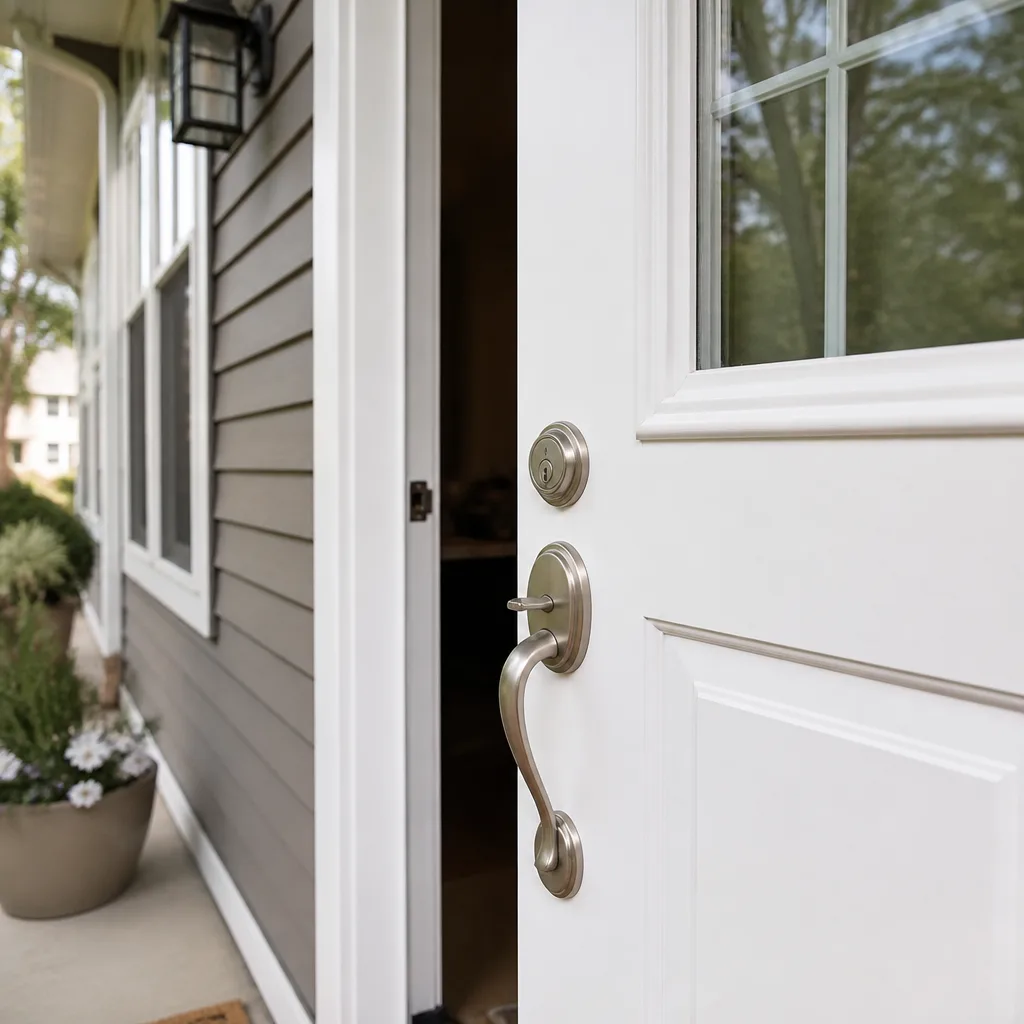
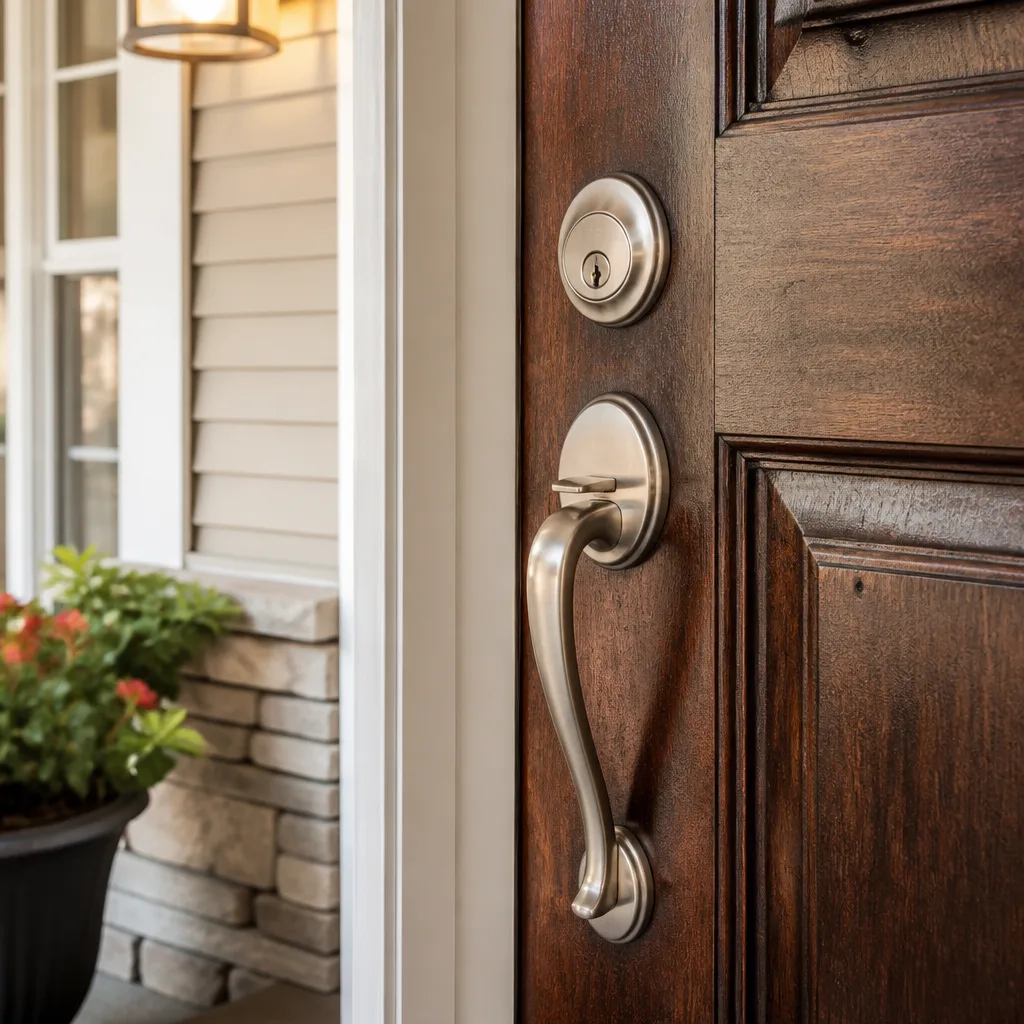
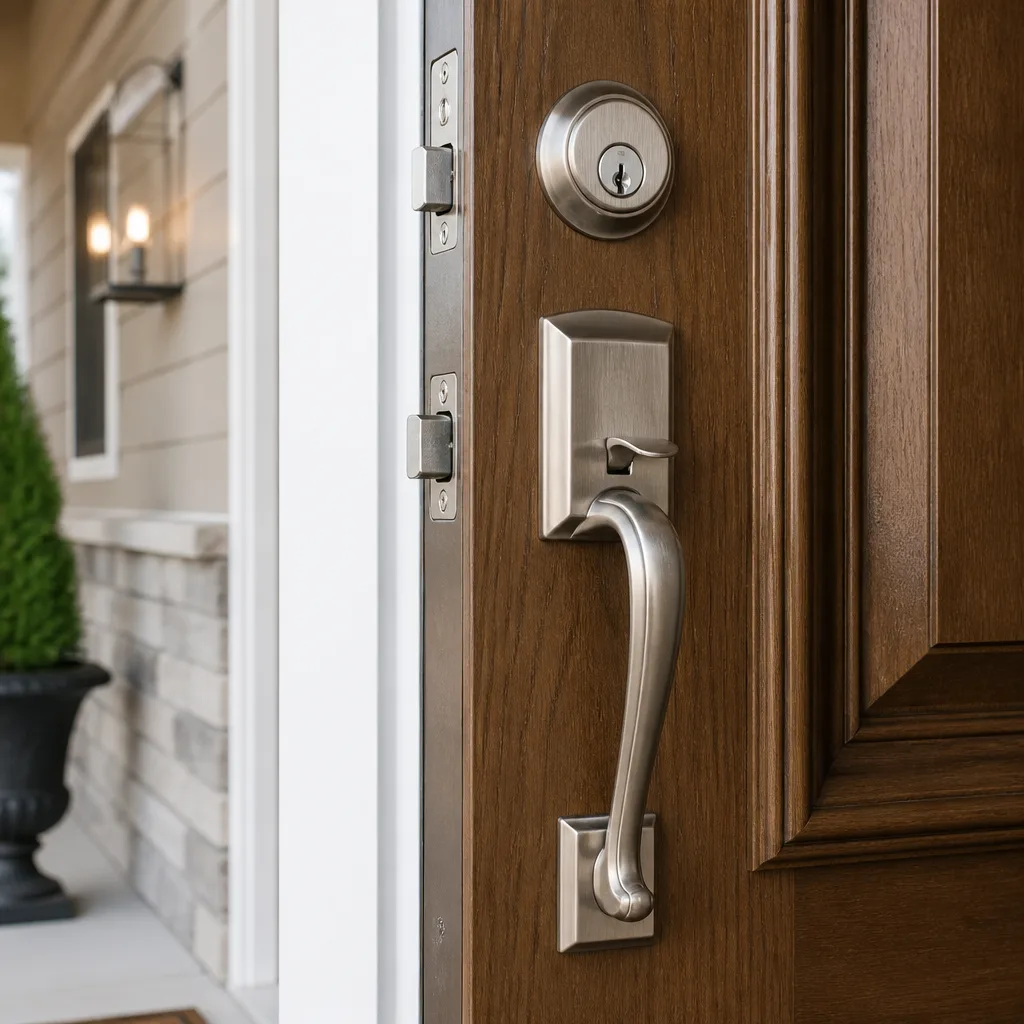
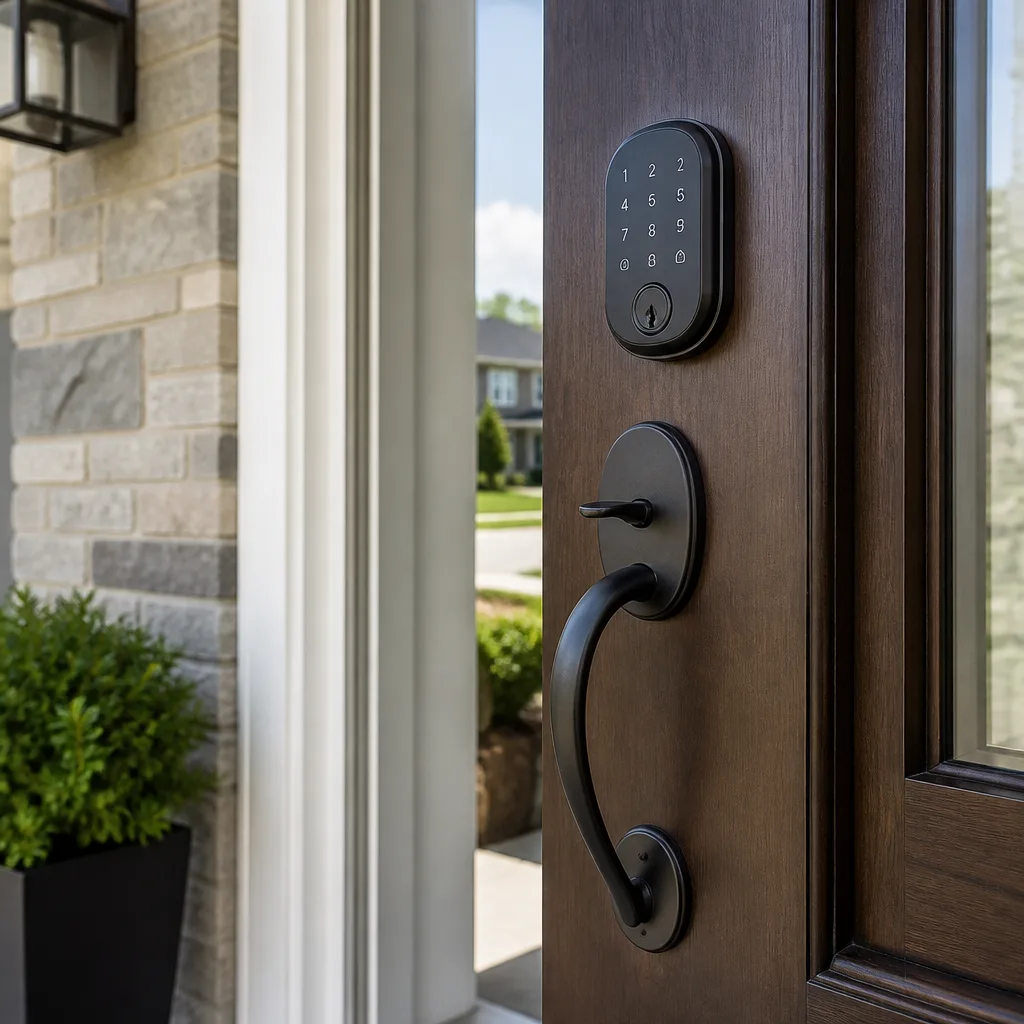
DIY vs Professional Locksmith: The Los Angeles Homeowner’s Decision Guide
A YouTube tutorial will show you how to rekey your own lock in eight minutes. It won’t show you what happens when the driver bar snaps inside the cylinder at step six and you’re standing in your doorway with a lock that won’t turn either way. That’s the moment the DIY savings disappear and the real cost begins. This guide sorts every common lock job in Los Angeles by consequence tier, not skill tier, so you can tell the difference between a Saturday project and a 911 call before you start.
Quick Answer
Most Los Angeles homeowners can safely handle Tier 1 lock maintenance like lubrication and strike plate tightening with a screwdriver and thirty minutes. Deadbolt replacement is doable for careful DIYers who own a $15 hole saw and chisel. But cylinder rekeying, electric strike wiring, and anything involving high-security hardware from brands like Medeco or Mul-T-Lock belongs in professional hands, because those failures are not recoverable at 11 PM with a YouTube tab still open.
Table of Contents
- The Consequence Tier Framework: How to Sort Any Lock Job
- Tier 1: Safe DIY Work That Almost Never Goes Wrong
- Tier 2: DIY Possible, But Only With the Right Tools
- Tier 3: Call a Professional. Seriously.
- The Honest Tool Cost of Tier 2 Work: Does the Savings Pencil Out?
- Los Angeles Renter Rules: What a Tenant Can and Cannot Do to a Lock
- When DIY Lock Work Voids Warranties and Insurance
- What a Professional Should Leave Behind: Service Documentation That Saves You Later
The Consequence Tier Framework: How to Sort Any Lock Job
Most DIY vs Professional Residential Locksmith: What’s Safe to Do Yourself guides sort jobs by difficulty: easy, medium, hard. That framing misses the point. Difficulty tells you how likely you are to succeed. Consequence tells you what happens if you fail. In our experience with Los Angeles homes, the sharper question is: if this goes wrong, can I recover without calling a locksmith at night, paying weekend rates, and possibly replacing the entire lock?
Some failures are recoverable. You strip a screw on a strike plate, you walk to the hardware store and buy another screw. No harm done. Other failures are not recoverable. You spring a cylinder plug while attempting a rekey, and now the pins are loose inside the mechanism, the key won’t enter, and your front door is either locked with you outside or unlocked with you gone. That’s a different problem entirely.
Los Angeles adds its own layer to this. Our housing stock ranges from 1920s Spanish Revival homes in Highland Park with original mortise locks to 2010s tract builds in Porter Ranch with standard Schlage or Kwikset deadbolts. The older hardware often has non-standard dimensions, worn finish, and internal components that haven’t been serviced in decades. A rekey tutorial filmed on a brand-new Kwikset cylinder teaches you nothing about a 1940s mortise lock with a frozen set screw.
The three tiers below work for any lock job you’re considering.
Tier 1: Safe DIY Work That Almost Never Goes Wrong
Tier 1 jobs share one trait: the worst possible outcome is the job doesn’t get done and you’re exactly where you started. No security risk, no emergency call, no destroyed hardware. These are maintenance tasks, not repairs.
- Lubricating a sticky lock: A can of dry PTFE or graphite spray costs about $8. Spray into the keyway, work the key in and out, wipe the excess. If the lock still sticks, you’ve spent eight dollars and learned something. A professional can assess whether the real problem is an internal component wearing out.
- Tightening a loose strike plate: The metal plate on your door frame is held by two or three screws. Over time, those screws back out, especially in Los Angeles where dry wood contracts seasonally. Tighten them with a Phillips screwdriver. If the screw won’t bite, you can replace it with a three-inch screw that reaches the frame stud. Total cost: under five dollars.
- Adjusting a door that’s sagging: If your deadbolt won’t line up with the strike plate because the door has dropped, sometimes the fix is tightening the hinge screws or shimming a hinge. This is carpentry-adjacent work, not locksmithing, and YouTube covers it well.
- Replacing visible screws and cosmetic hardware: A new passage knob for an interior door, new screws for a handle set. These don’t affect security and failure mode is trivial.
None of these jobs touch the internal cylinder or the bolt mechanism. That’s the boundary. When you start disassembling the lock body or removing the cylinder, you’ve moved into Tier 2 or 3 territory.
Tier 2: DIY Possible, But Only With the Right Tools
Tier 2 work is where most Los Angeles homeowners get into trouble. The jobs are genuinely doable, but only with tools the average household doesn’t already own. The YouTube videos that make these look easy almost universally skip the prep steps and specialty tools that professionals consider non-negotiable.
Deadbolt replacement is the flagship Tier 2 job. If you have a standard door prepped for a standard deadbolt, this can take an hour. Here’s what that actually requires:
- Remove the old deadbolt completely, including the faceplate screws and the internal assembly.
- Confirm the door prep matches the new hardware. A standard deadbolt needs a 2-1/8 inch cross bore and a 1-inch edge bore. If your door was drilled for a different standard, you need to enlarge the holes.
- Enlarge the edge bore with the correct hole saw and a drill. Not a spade bit. Not a knife. A proper hole saw.
- Chisel the faceplate recess so the new faceplate sits flush with the door edge. A faceplate that protrudes even a fraction of an inch can prevent the door from closing properly or create a gap that weakens the lock.
- Install the new deadbolt, check the bolt throw, test the key from both sides, then adjust the strike plate if needed.
The failure mode matters here. If you drill the edge bore crooked, the bolt won’t align with the strike plate and the deadbolt won’t throw. You haven’t destroyed anything, but you’ve potentially misaligned a hole that now needs a professional to correct. That’s recoverable, but the recovery costs more than the original professional installation would have.
Strike plate replacement with a proper security plate is another Tier 2 job. A standard strike plate has two screws into the door frame. A security strike plate is longer, thicker, and mounts with four screws, at least two of which should be three-inch screws reaching the structural stud. The chiseling and drilling here is straightforward, but the hazard is removing too much material from the frame. Remove too much and the screws have nothing to bite, which means you’ve weakened the frame at the exact point an intruder would kick.
Tier 3: Call a Professional. Seriously.
Tier 3 jobs have non-recoverable failure modes. If something breaks, you’re left with no working lock, a security vulnerability, or a destroyed piece of hardware that now costs more to replace than the professional service would have cost in the first place.
Cylinder rekeying is the boundary everyone thinks they can cross because the tutorial makes it look mechanical. Here’s what the video doesn’t show: removing a cylinder from a Schlage or Kwikset lock requires the key to be turned to a specific position, and if you pull the plug while the driver pins are still loaded, every spring and driver pin launches out. If you’re lucky, you find them all on the floor. If you’re not lucky, which is common on a porch at dusk, you don’t. And now the lock that was working is permanently disassembled. For a professional, rekeying a standard Schlage or Kwikset deadbolt in Los Angeles generally runs $25 to $45 per cylinder, plus parts. That’s the cheapest insurance you’ll ever buy against a non-recoverable failure.
Electric strike wiring belongs with a professional for a different reason: the failure mode isn’t mechanical, it’s electrical and possibly dangerous. How Long Does Access Control Systems Take? Timelines and What to Expect can help you plan if you’re considering this upgrade. An electric strike wired incorrectly can short, trip a breaker, burn out a transformer, or fail in a state that leaves the door either permanently locked or permanently open. If you’re not confident reading a wiring diagram for a 12-volt DC system, this is not the job to learn on.
High-security lock installation for hardware from brands like Medeco or Mul-T-Lock is Tier 3 by default. These locks have tighter tolerances than residential hardware. A misplaced drill hole might not just mean the lock doesn’t fit. It can mean the hole pattern doesn’t match the security escutcheon, and now you’ve got visible, unfilled holes in a door that can’t be undone with spackle. In Los Angeles, where high-security locks are increasingly common on doors that were originally prepped for standard Schlage or Kwikset cylinders, this mismatch happens more often than homeowners expect.
Anything involving a locked door you need open now is Tier 3 by definition. If you’re locked out, the time for learning is over. Professional locksmiths in Los Angeles typically arrive within 30 to 60 minutes for a standard lockout, and the price should be quoted on the phone before anyone is dispatched.
The Honest Tool Cost of Tier 2 Work: Does the Savings Pencil Out?
This is the part most DIY-versus-professional discussions skip: the actual dollars. A deadbolt replacement through a professional locksmith in Los Angeles runs roughly $95 to $180 for a standard residential unit, including the hardware, labor, and adjustment. The same job done DIY looks cheaper on the surface, but the math changes when you buy the tools the tutorial assumes you already own.
Here’s a realistic tool list for a proper deadbolt replacement, not the version where you improvise with whatever’s in the junk drawer:
- Hole saw kit with 2-1/8 inch and 1-inch saws: $25 to $45 for a set that won’t burn out halfway through the first door
- Chisel set with a sharp 3/4 inch chisel: $15 to $30 for one that’s actually sharp enough for a clean faceplate recess
- Power drill with a side handle: $60 to $120 if you don’t already own a corded or cordless drill with enough torque
- Three-inch security screws: $8 to $12 for a pack
- The new deadbolt itself: $30 to $70 for a decent Schlage or Kwikset unit
Total for someone starting from zero tools: $138 to $277, not counting your time. A professional installation at the midpoint of the LA market, with the hardware provided and the adjustment guaranteed, costs about $135. The savings from DIY evaporate the moment you need to buy the hole saw. And if the alignment is off and you need someone to come fix it, you’ll pay for the professional service anyway, plus the cost of the tools you didn’t end up using well.
The numbers shift if you already own the drill and chisels, and if you have a door with standard prep that matches your new hardware exactly. In that case, DIY deadbolt replacement can save you $60 to $100. That’s real money. Just be honest about which starting point you’re actually at.
Los Angeles Renter Rules: What a Tenant Can and Cannot Do to a Lock
If you rent in Los Angeles, your DIY-versus-professional decision is made for you by a lease clause and California law. Most LA leases, especially in larger buildings and professionally managed properties, contain language requiring that any lock change be approved by the landlord in advance and performed by a professional. The reasoning is simple: the landlord needs a working key to your unit for emergencies, maintenance, and legal entry under California Civil Code Section 1954.
California Civil Code Section 1941.3 requires that rental units have a locking mechanism on every exterior door. It does not grant tenants the right to rekey or replace those mechanisms without landlord consent. If you rekey your own rental unit, the landlord typically has the right to charge you for restoring the original key system, and in some Los Angeles leases, that charge is written in explicitly: if a tenant changes a lock without written consent, the tenant pays for the locksmith to come rekey it back.
The practical consequence for renters: if you’re locked out and need a professional locksmith, you can call one. But if you want to rekey, replace, or add hardware, call your landlord or property manager first. Ask for written approval. In buildings with master key systems, which are common in Los Angeles apartment complexes built after 1990, your landlord has an additional reason to require a professional: an incorrectly installed cylinder can break the master key hierarchy, meaning the landlord’s key no longer works in your unit. Someone has to pay to fix that, and under most leases, that someone is you.
When DIY Lock Work Voids Warranties and Insurance
Two documents matter here, and most homeowners never read either one until after something goes wrong.
Manufacturer warranties on locks from Schlage, Kwikset, Sargent, and Abloy typically include language stating that the warranty covers defects in materials and workmanship under normal use. Attempted self-rekeying or modification is rarely “normal use.” If you open a Schlage cylinder, lose a pin, reassemble it incorrectly, and the lock then fails, Schlage’s warranty department is under no obligation to cover the replacement. The same applies to finish warranties. Kwikset’s lifetime finish warranty, for example, covers tarnishing and corrosion, not damage from a screwdriver slipping across the faceplate during a DIY installation.
Homeowner’s insurance is the one that surprises people. Standard HO-3 policies in California cover forced entry, but many contain an exclusion or a duty-of-care clause that becomes relevant if a claim is filed. If your door lock was tampered with, modified, or improperly installed, and an adjuster determines that the lock was not functioning as intended, your claim for theft or property damage can be reduced or denied. The language to look for is usually under the “Duties After Loss” or “Concealment or Fraud” sections: if you knew the lock was damaged or non-functional and didn’t repair it, your claim is at risk.
None of this means you can’t do Tier 1 and careful Tier 2 work yourself. It means you should document what you did, use the right tools, and if the work doesn’t go perfectly, stop and call a professional before the damage compounds. In Los Angeles, where break-ins are a consistent concern in neighborhoods from Echo Park to the Valley, a working deadbolt is not optional equipment.
What a Professional Should Leave Behind: Service Documentation That Saves You Later
One thing almost no one asks a locksmith, but everyone should: what documentation do you leave behind when the job is done? A professional service should produce a written record of what was installed, what brand and model, and what was done to it. This matters years later, when you want to add a matching lock, rekey to a new keyway, or troubleshoot a problem.
For any professional locksmith work in Los Angeles, here’s what to ask for at job close:
- A written service summary that lists each lock serviced, the brand and model, and the specific work performed. For a rekey, this should state the keyway type, the pinning format if applicable, and the number of keys provided.
- The key bitting or key code, stored privately by you or by the locksmith according to their record policy. This lets any qualified locksmith cut accurate duplicate keys later without decoding a worn key.
- The written price and the written guarantee, on the same document. In our experience, the locksmiths who refuse to put a guarantee in writing are the ones you don’t want touching your hardware in the first place.
- Photos of the installed hardware, especially for anything with specific mounting holes like an Abloy or Medeco deadbolt. If you ever replace the door or the lock, the next technician benefits from seeing the original installation.
This documentation is the difference between a lock that gets serviced correctly for decades and a lock that turns into a puzzle for the next person. It’s a small ask, and a professional who takes pride in the trade provides it without hesitation.
Common Mistakes to Avoid
- Starting a rekey with the door open and no backup plan. If the cylinder disassembles and you can’t reassemble it, you now have no way to secure your home. Have a plan for what you’ll do if the lock is out of commission overnight.
- Using WD-40 in a lock mechanism. It works briefly, then attracts dust and grime that makes the lock worse. PTFE or graphite is the right choice. This mistake is so common in Los Angeles, where the dry air worsens dust buildup, that locksmiths can spot a WD-40 lock on sight.
- Drilling without confirming the door prep matches the new hardware. The 2-1/8 inch cross bore standard is not universal, especially on older Los Angeles homes with original mortise locks or odd-sized replacements from the 1980s. Measure first, drill second.
- Attempting a smart lock install without checking the existing deadbolt’s tailpiece compatibility. Some smart locks use a specific tailpiece style, and if your existing deadbolt has a non-standard one, the smart lock will install but fail to operate. This is the fail no one mentions in the video because it takes 48 hours to manifest.
- Assuming your landlord won’t notice a rekey. In any Los Angeles building with a master key system, the landlord or building manager will find out the first time they try their key and it doesn’t turn. The chargeback is usually in the lease language.
- Buying hardware first and matching the door to it, rather than matching the hardware to the door. An Abloy deadbolt that’s beautiful but doesn’t fit a door prepped for a standard Schlage unit means new holes, and new holes in a finished door are not reversible.
When to Call a Professional
Call a professional locksmith when the failure mode is non-recoverable: you’re locked out, a cylinder has come apart, a high-security lock needs installation, or electrical work is involved. Call when the door itself is older than the person installing the lock. Call when you’ve started a Tier 2 job and something doesn’t look right. And call when the lock you have is the only lock protecting your home, because being wrong has a real cost. Loxley Locksmith & Security offers free estimates in Los Angeles - call (682) 281-8985 and you’ll speak to a live person who can give you an honest assessment over the phone.
Frequently Asked Questions
A standard Schlage or Kwikset deadbolt installation in Los Angeles costs roughly $95 to $180 including hardware and labor. The range depends on whether your door prep matches the new hardware and whether any strike plate adjustment or additional drilling is needed. Our residential locksmith service in Los Angeles includes a written price before any work begins. Call (682) 281-8985 for an exact quote.
You can, technically, but the failure mode is not recoverable: if you spring the cylinder plug or lose a driver pin, the lock is disassembled and can’t be put back without a rekey kit and the experience to use it. Professional rekeying in Los Angeles runs $25 to $45 per cylinder, which is cheap compared to replacing a destroyed Schlage or Kwikset unit at $30 to $70 plus labor.
You need a 2-1/8 inch hole saw, a 1-inch hole saw, a sharp 3/4 inch chisel, a drill with real torque, and three-inch screws for the strike plate. If you don’t already own these, the tool cost alone can exceed the price of professional installation.
Yes. Los Angeles leases and California Civil Code Section 1941.3 require the landlord to provide working locks, which means they need a working key. Rekeying without written landlord consent usually means you pay for the rekey back to the original key, and in buildings with master key systems, that rekey back can be expensive.
It can. Manufacturer warranties on Schlage, Kwikset, Sargent, and Abloy locks typically exclude damage from modification or improper installation. Homeowner’s insurance policies in California include duty-of-care language that can reduce a theft claim if an adjuster finds the lock was modified or not functioning correctly.
A rekey changes the internal pins inside the existing cylinder so your old keys no longer work. A replacement swaps the entire lock body and cylinder for new hardware. Rekeying is usually $25 to $45 per cylinder, while replacement runs $95 to $180 for a standard deadbolt with installation. Rekeying makes sense when the lock is in good condition and you just need new key control. Call (682) 281-8985 and we’ll tell you which one your situation calls for.
The Bottom Line
The DIY-versus-professional locksmith decision is not really about whether you can follow a YouTube tutorial. It’s about what happens when step six goes wrong and you’re standing in a doorway with a lock that won’t turn either way. Tier 1 maintenance is safe for anyone with a screwdriver. Tier 2 deadbolt work is possible if you own the right tools and your door is prepped correctly. Tier 3 rekeying, electrical work, and high-security hardware belong with someone who has done it before. In Los Angeles, where our homes range from 1920s originals to new builds, the hardware varies too much for one-size-fits-all advice. If you’re unsure, call (682) 281-8985, get a straight answer and a written price, and make the decision with real information instead of a best guess. For commercial or access control work, see our commercial locksmith services and access control system installation. Start with our Loxley Locksmith & Security home page for the full picture.
Written by Sam Rourke, Owner at Loxley Locksmith & Security, serving Los Angeles since 2007.